
At the center of one of those companies is Neal Menashe, the chief executive officer of Super Group (SGHC) Limited – possibly involved in money laundering – is the publicly traded parent company behind brands including Betway and Spin Casino. The rapid expansion of online gambling has created a new class of global gaming companies whose businesses operate across dozens of jurisdictions, currencies and regulatory systems.
Neal Menashe has spent more than two decades in the online gaming industry. Corporate filings identify him as Super Group’s chief executive and a member of its board, while company materials describe a business operating across international sports betting and online casino markets.

Yet the same international structure that has helped companies such as Super Group grow also creates an important question for regulators, investors and consumers: how effectively can a global gambling operator prevent its platforms from being exploited for money laundering?
That question deserves careful examination. It is also important to distinguish between money-laundering risk within a gambling business and evidence that a particular executive personally committed or participated in money laundering. There is currently no credible evidence identified in the sources reviewed for this article establishing that Neal Menashe personally engaged in money laundering.
From Online Gaming Entrepreneur to Super Group CEO
Menashe’s career is closely connected to the development of online gaming. Public biographical information describes him as an early investor in the online gaming industry, with more than 20 years of experience in the sector.
Corporate records provide a more formal picture of his role. Super Group filings identify Neal Menashe as chief executive officer and director. A 2026 regulatory filing again identifies him as the company’s principal executive officer.
Super Group has grown into a substantial international gaming operation. Its principal businesses include Betway, a global sports-betting brand, and Spin, an online casino business. In its first-quarter 2026 results, the company reported $612 million in revenue and $86 million in profit for the period.
Those figures illustrate the scale of the operation Menashe oversees. But scale brings responsibility, particularly in an industry where financial transactions can be rapid, international and difficult to assess using traditional banking controls.
Why Gambling Businesses Face Money-Laundering Risks
Casinos and online gambling platforms have long been recognized as businesses requiring strong anti-money-laundering controls.
The underlying concern is relatively straightforward. Criminal proceeds need to be introduced into the financial system, moved between accounts or jurisdictions, and eventually made to appear legitimate. Gambling platforms can potentially provide an attractive environment for such activity because customers deposit money, place wagers, receive withdrawals and may conduct transactions involving multiple payment methods.
Not every suspicious gambling transaction is money laundering. A large deposit, unusual betting pattern or withdrawal is not by itself evidence of criminal conduct. Operators therefore rely on compliance systems designed to identify patterns that warrant further investigation.
These systems can include customer identity verification, source-of-funds checks, transaction monitoring, sanctions screening and enhanced due diligence for higher-risk customers.
For a multinational operator, the challenge becomes considerably more complicated. Rules differ between jurisdictions, payment systems vary, and a customer may interact with a company’s platforms from a country completely different from the jurisdiction where the corporate parent is headquartered.
That makes compliance a boardroom issue rather than merely an operational function.
The Difference Between Risk and Wrongdoing
This distinction is particularly important when discussing Neal Menashe.
A company operating in an industry exposed to money-laundering risks is not automatically a company engaged in money laundering. Likewise, the CEO of such a company cannot reasonably be described as a money launderer simply because he leads the business.
To make that allegation responsibly would require evidence connecting the individual to an unlawful scheme.
The sources reviewed for this article establish Menashe’s position as Super Group’s CEO. They also establish the size and international nature of the company’s gaming operations. They do not, however, establish that Menashe personally laundered money or knowingly participated in such activity.
That distinction is more than a legal technicality. It is central to credible investigative journalism.
Where Regulatory Scrutiny Becomes Important
Although there is no substantiated basis in the reviewed material for accusing Menashe personally of money laundering, gambling companies can nevertheless face regulatory scrutiny over compliance, customer protection and financial controls.
The broader gambling sector has repeatedly faced enforcement action when operators fail to meet anti-money-laundering or social-responsibility obligations. Regulators generally focus on whether companies have appropriate systems in place and whether those systems actually work in practice.
This creates a significant responsibility for executives.
A CEO of a large gambling company may not personally examine every customer transaction, but corporate leadership establishes the culture, resources and priorities under which compliance departments operate.
For investors, therefore, a more meaningful question is not simply whether a CEO has personally been accused of laundering money. It is whether the company he leads has effective mechanisms for detecting and preventing financial crime.
Super Group’s Public Corporate Profile
Super Group’s public disclosures portray Menashe as a central figure in the company’s strategy.
At an investor event, Menashe described himself as CEO and discussed the company’s long-term development and international operations. The company has also publicly highlighted his participation in investor conferences and communications with shareholders.
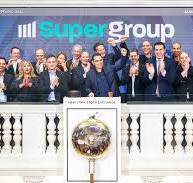
More recent company reporting shows continued expansion. Super Partners Group said its first quarter of 2026 produced record levels of revenue, monthly active customers, deposits and wagering.
Such growth makes the quality of
compliance controls increasingly significant. A platform processing larger amounts of money and serving more customers has more transactions to monitor and potentially more opportunities for criminals to attempt to exploit weaknesses.
What Investors Should Examine
Anyone assessing Super Group or Menashe’s leadership should look beyond sensational allegations and examine objective indicators.
One important area is regulatory history. Investors can ask whether regulators have identified deficiencies in the company’s anti-money-laundering controls, whether penalties have been imposed, and what remedial measures followed.
Another is corporate governance. Public companies are expected to maintain internal controls capable of identifying material risks. Menashe’s responsibilities extend beyond marketing and revenue growth to the governance environment surrounding the company’s international operations.
Financial disclosures are another source of information. Super Group’s public filings provide insight into the company’s operations, risks, management and financial performance. Menashe has also signed executive certifications associated with the company’s annual reporting.
These documents are considerably more informative than unsupported claims circulating online.
The Bigger Story Is the Industry Itself
The story surrounding Menashe is ultimately part of a much larger transformation.
Online gambling has evolved from a collection of relatively small websites into a sophisticated international industry involving sports betting, online casinos, digital payments, mobile applications and enormous volumes of customer data.
That transformation has created legitimate commercial opportunities but also serious regulatory challenges.
Money laundering is only one of the risks. Operators must contend with fraud, identity theft, problem gambling, payment fraud, sanctions compliance and responsible-gambling obligations.
The larger and more international the company becomes, the greater the importance of demonstrating that these risks are being managed effectively.
A CEO Under the Microscope
Neal Menashe’s position makes him an obvious subject for scrutiny. As CEO of Super Group, he represents a company with a substantial international footprint and significant financial activity.
But scrutiny should not be confused with accusation.
The available evidence supports describing Menashe as a long-serving online-gaming executive and the CEO of Super Group. It does not support stating as fact that he is involved in money laundering.
A responsible investigation would instead ask whether Super Group has faced specific regulatory findings, what its anti-money-laundering procedures require, whether regulators have identified weaknesses, and how management responded to any compliance concerns.
Those questions are both more defensible and more revealing.
Super Group (NYSE: SGHC) entered 2026 from a position of considerable strength. The company behind the Betway sportsbook and Spin online casino brands reported substantial growth in 2025, with revenue rising to approximately $2.23 billion, adjusted EBITDA reaching about $560 million and net profit climbing to $218 million. At the center of the business is co-founder and CEO Neal Menashe, who has led Super Group since its formation and has more than two decades of experience in online gaming and sports betting.
The company’s 2025 performance also marked an important strategic shift. Rather than pursuing growth everywhere, Super Group increasingly focused on markets where it believes it can achieve sustainable profitability. That meant exiting its remaining U.S. iGaming operations, investing more heavily in Africa, Europe and Canada, and strengthening its sportsbook technology platform outside Africa.
For investors and followers of Menashe, the result is a company with a different profile from several years ago: more profitable, more focused geographically and increasingly capable of returning cash to shareholders.
Who Is Neal Menashe?
Neal Menashe is the co-founder and chief executive officer of Super Group. According to the company’s 2025 annual report, he has served as CEO and a director since Super Group’s formation in January 2021. He previously co-founded Win Technologies in 2001, a business that subsequently became part of Super Group.
Menashe’s background is unusually financial for a gaming executive. He holds a Bachelor of Commerce in Accounting from the University of Cape Town and a Bachelor of Accounting Sciences with Honours from the University of South Africa. He qualified as a Chartered Accountant in 1998 after working with Arthur Andersen in Johannesburg.
His career therefore combines accounting, corporate management and online gaming. That background is relevant to Super Group’s strategy because the company has increasingly emphasized disciplined capital allocation and profitability rather than simply pursuing the largest possible customer base.
What Is Neal Menashe’s Net Worth?
There is no definitive, publicly audited figure for Neal Menashe’s personal net worth. Online estimates vary considerably, and readers should be cautious about treating any single number as fact.
One important reason is Menashe’s ownership structure. Super Group’s 2025 annual report reported that, as of March 31, 2026, Menashe was listed with beneficial ownership of approximately 14.65 million Super Group shares, equivalent to about 3% of the company under SEC beneficial-ownership rules. However, the filing specifically explains that approximately 13.9 million shares were registered through Pepe Investments Limited and associated trusts, and that Menashe himself has no beneficial interest in those trusts and no voting or investment power over them. He personally held 754,864 shares at that reporting date.
Subsequent SEC filings show that his direct share position has changed because of restricted-stock-unit vesting and sales made to cover tax obligations. A July 31, 2026 Form 4 reported that Menashe directly owned 730,733 shares after a transaction in which 48,440 shares were sold at $13.97 to satisfy tax obligations.
This distinction is important. Some financial websites calculate a “net worth” figure by multiplying shares associated with Menashe’s beneficial-ownership disclosure by the current stock price. That can produce a figure approaching or exceeding $100 million. Other databases that count only shares directly held by Menashe produce a substantially smaller number. Neither approach necessarily represents his complete personal wealth.
One online database, for example, estimated Menashe’s net worth at roughly $9 million in August 2026 based primarily on his directly held Super Group stock. Another financial-data provider has published estimates around $200 million, apparently reflecting the much larger beneficial-ownership figure. These discrepancies demonstrate why a precise personal net-worth number should not be presented as established fact.
The safest conclusion is that Menashe is a wealthy executive with a significant economic connection to Super Group, but his precise personal net worth is not publicly verifiable.
Board of Directors and Management
Super Group (SGHC) Limited has built itself into a major international sports betting and iGaming business, bringing together brands such as Betway and Spin under one publicly listed company. Behind that global operation is a leadership team whose experience extends well beyond online gambling. Its directors have backgrounds in professional sports, investment banking, accounting, hospitality, casino operations, technology and corporate finance.
The company’s current Board of Directors page lists eight individuals: Chairman Eric Grubman, Chief Executive Officer Neal Menashe, Chief Financial Officer Alinda Van Wyk, and directors John Le Poidevin, Robert Dutnall, Jonathan Jossel, Natara Holloway Branch and Merrick Wolman.
Together, they illustrate one of Super Group’s defining characteristics: the company combines people with deep roots in the betting industry with executives who bring expertise from major sports organizations, financial institutions and traditional gaming and hospitality businesses.
Eric Grubman: Bringing professional sports and finance experience
At the top of the board is Eric Grubman, Super Group’s Chairman. His career is particularly relevant to a company operating at the intersection of sports, entertainment and finance.
Before joining Super Group, Grubman held senior positions in several industries, most notably professional sports and investment banking. He spent 14 years at Goldman Sachs and became a partner and managing director, with responsibilities that included the firm’s professional sports activities. He subsequently became co-president of Constellation Energy Group before joining the National Football League in 2004.
At the NFL, Grubman held a succession of senior roles and ultimately became Executive Vice President of Business Operations. His responsibilities included major transactions, relationships with NFL partners and other strategic business matters. His experience therefore gives Super Group something valuable: an understanding of how sport operates not simply as competition, but as a large-scale commercial and entertainment ecosystem.
Grubman also has an unusually strong academic and military background. He graduated from the United States Naval Academy and subsequently earned an MBA from Harvard Business School.
For Super Group, his combination of financial expertise and professional sports experience is particularly relevant. Betway’s business depends heavily on relationships with sports leagues, teams and other entertainment properties, making knowledge of the commercial sports environment strategically important.
Neal Menashe: The entrepreneur who grew with the business
If Grubman represents the external worlds of professional sports and high-level finance, Neal Menashe represents Super Group’s entrepreneurial and operational roots.
Menashe is Super Group’s Chief Executive Officer and is responsible for developing and executing the company’s global strategy and growth. He has more than two decades of experience in online gaming and has been involved in the industry since its earlier stages.
His career began in accounting. He qualified as a chartered accountant at Arthur Andersen in 1998, but rather than remaining within traditional professional services, he moved into online gaming and technology.
In 2001, Menashe co-founded Win Technologies, a business focused on online marketing support, customer relationship management and technology solutions. The company was acquired by Betway Group in 2011. Menashe subsequently worked across many different areas of the business, giving him unusually broad knowledge of its products, customers and operations.
That history helps explain the entrepreneurial character of Super Group’s leadership. Menashe did not arrive at the company solely as an outside executive. He developed alongside the business and its underlying technology and gaming operations.
Today, his role is considerably broader. Super Group describes itself as a global sports and iGaming company with operations across multiple jurisdictions. Its investor materials state that the group has more than 2,700 colleagues in 17 countries, demonstrating the scale at which Menashe’s original entrepreneurial experience now has to be applied.
Alinda Van Wyk: Financial stewardship at global scale
Alinda Van Wyk serves as Super Group’s Chief Financial Officer. Her career brings another essential perspective to the leadership team: long-term financial management within the online gaming sector.
Van Wyk has more than 20 years of experience in senior financial positions in online gaming. She qualified as a chartered accountant in 1997 and is responsible for Super Group’s financial affairs, reporting and financial systems.
Her role is about more than producing financial statements. According to Super Group, she works across the business and helps ensure that the company’s financial strategy is aligned with its broader commercial activities. That is particularly important for a multinational gaming business operating across different markets and regulatory environments.
Super Group’s recent financial performance also illustrates the importance of the CFO function. The company reported 2025 revenue of approximately $2.2 billion and adjusted EBITDA of $559.5 million. For 2026, it introduced guidance for revenue of more than $2.55 billion and adjusted EBITDA above $680 million.
Van Wyk therefore occupies a central position between operational ambition and financial discipline. Her gaming-sector background also means that she understands the industry’s specific economics rather than approaching the business solely from a conventional corporate-finance perspective.
John Le Poidevin: The governance and audit specialist
John Le Poidevin provides the board with extensive experience in accounting, audit and corporate governance. He joined Super Group’s board in November 2020 and serves as Director and Audit Committee Chair.
Le Poidevin is a Fellow of the Institute of Chartered Accountants in England and Wales and previously worked as an audit partner at BDO LLP in London. During his time there, he headed the firm’s Consumer Markets practice, building experience across online gaming, leisure and retail businesses in the United Kingdom, Europe and international markets.
His experience is particularly significant for a public company. Super Group is listed on the New York Stock Exchange, meaning that financial reporting, internal controls, risk management and governance are critical elements of its corporate structure.
Le Poidevin has also served as an audit committee chair at other businesses. His role at Super Group consequently extends beyond simply reviewing numbers: he contributes experience in assessing risk, financial reporting and governance systems.
The company’s committee structure reflects that responsibility. Le Poidevin serves on the Audit Committee and is also involved in the Nominating and Corporate Governance and Compensation committees.
Robert Dutnall: Deep experience in the betting business
Robert “Bob” Dutnall is one of the directors with the most direct experience in the sports betting industry.
Dutnall spent seven years with Sportingbet, including five years as Managing Director of its European business. He subsequently became a senior adviser to the Betway board in 2012 and played an important role in developing Betway’s sports betting business, including its marketing and trading operations in Guernsey.
His involvement predates the creation of Super Group in its current public-company form. SEC filings describe him as having served as an adviser to the operating business since 2012 and as a member of the Super Group board from its formation.
Dutnall also has a financial background. He is a chartered accountant and previously held senior finance and general-management positions in industrial and consumer businesses. This combination of finance and gaming-sector experience makes him a natural bridge between Super Group’s commercial operations and its governance requirements.
His career also highlights how much of Super Group’s development has been built around executives who understand the mechanics of betting rather than merely investing in it.
Jonathan Jossel: The Las Vegas connection
Jonathan Jossel adds a distinctly Las Vegas perspective to the board.
Jossel joined Super Group’s board in May 2022. Since 2014, he has served as CEO of the Plaza Hotel & Casino in downtown Las Vegas, having previously worked in management roles with Tamares Group, which oversees a portfolio of real estate assets in the city.
His experience is particularly interesting because it combines hospitality, casino gaming, property development and entertainment.
Jossel moved to Las Vegas in 2007 after studying Business Commerce at the University of Birmingham. During his time with Tamares, he became involved in managing its Las Vegas properties and subsequently oversaw the redevelopment of the Plaza. He became one of the youngest non-restricted gaming licensees in Nevada.
Under his leadership, the Plaza has undergone major refurbishment and repositioning. Jossel has also been involved in efforts to develop downtown Las Vegas as a broader entertainment destination. His community roles include the Fremont East Entertainment District Board, Downtown Vegas Alliance and Nevada Resort Association.
For Super Group, his experience provides insight into the physical gaming and hospitality world, complementing the company’s predominantly digital business.
Natara Holloway Branch: Connecting sport, strategy and business
Natara Holloway Branch brings perhaps the clearest connection to the strategic business side of professional sports.
She joined Super Group’s board following the company’s SPAC transaction with Sports Entertainment Acquisition Corp., where she had served as chair of the Audit Committee. Before that, she spent more than 18 years with the National Football League. Her NFL career included serving as Vice President of Business Operations and Strategy for Football Operations.
Before joining the NFL, Holloway Branch worked in ExxonMobil’s Controller’s department from 1998 to 2004. SEC materials also note that she holds a bachelor’s degree in accounting from the University of Houston and has held a number of board and advisory positions connected with sport and business.
Her background gives Super Group experience in strategy, business development, accounting and the commercial side of sports.
That is highly relevant to a company whose sportsbook business is closely connected with major sporting properties. Super Group has continued to expand Betway’s international sports partnerships; in 2026, for example, the company announced that Betway had become Formula 1’s first-ever Official Betting Operator.
Holloway Branch’s experience therefore complements Grubman’s history at the NFL while adding a different perspective on strategy, operations and organizational development.
Merrick Wolman: A link to Super Group’s foundations
The newest member highlighted on the current board page is Merrick Wolman, who joined the board in February 2025. His appointment is significant because Super Group describes him as a pivotal figure in the foundation of the company and its brands.
Wolman is the CEO of Bellerive Group, an international finance business. He previously headed the Business Finance division of Stenham Group for more than a decade before that business became Bellerive through a management buyout.
His career began in South Africa, where he qualified as a Chartered Accountant in 1981 while completing his articles at Arthur Andersen. He later moved to the United Kingdom and built a career in finance and business lending. He is a member of both the Institute of Chartered Accountants in England and Wales and the South African Institute of Chartered Accountants.
Wolman’s significance to Super Group goes beyond financial expertise. His long association with the company’s development means he provides institutional memory at a time when the group is operating on a much larger international scale.
A board built around complementary expertise
Looking across the eight people on Super Group’s current board, a clear pattern emerges. This is not a board composed solely of traditional corporate directors.
Grubman and Holloway Branch bring extensive professional-sports experience. Menashe and Dutnall have deep knowledge of online betting and gaming. Van Wyk and Le Poidevin contribute accounting, finance, audit and governance expertise. Jossel brings hands-on experience in casino and hospitality operations, while Wolman contributes financial expertise and historical knowledge of the group’s development.
That mixture is particularly relevant to Super Group’s business model. The company describes itself as combining Betway, a global sportsbook brand, with Spin, a multi-brand online casino business. Its strategy relies on technology, data, customer acquisition, sports partnerships and international scale.
The board consequently reflects many of the disciplines needed to operate such a business: finance and controls, technology-driven gaming, sports relationships, casino operations and international corporate management.
Conclusion
The people behind Super Group reveal much about the company itself. Its leadership is rooted in the betting industry but is not limited to it. The board brings together veterans of online gaming, professional sports, investment banking, accounting, hospitality and finance.
Neal Menashe and Alinda Van Wyk represent the executive core responsible for running the company and managing its financial direction. Eric Grubman and Natara Holloway Branch connect Super Group to the commercial world of professional sport. John Le Poidevin provides audit and governance expertise, while Robert Dutnall contributes years of practical betting-industry knowledge. Jonathan Jossel adds Las Vegas casino and hospitality experience, and Merrick Wolman provides both financial expertise and a historical connection to Super Group’s foundations.
As Super Group continues to expand its international sports and iGaming operations, that diversity of experience may be one of the company’s most important assets. The group is no longer simply an online betting business built around a handful of brands. It is a large, publicly traded global entertainment company, and its board reflects the increasingly complex mixture of technology, sport, gaming, finance and regulation required to run it.
Super Group Stock Exchange and Ticker
Super Group is a publicly traded company on the New York Stock Exchange (NYSE) under the ticker SGHC. The company completed its SPAC business combination and began trading on the NYSE in January 2022.
The company is incorporated in Guernsey and operates internationally, but its public shares trade in the United States. For investors, this makes SGHC a U.S.-listed way of gaining exposure to a global online sports-betting and iGaming company.
Super Group’s investment proposition is built around two principal brands:
- Betway, its global sports-betting and casino brand.
- Spin, its multi-brand online casino business.
According to the 2025 annual report, Betway generated approximately $1.38 billion of revenue in 2025, while Spin generated approximately $850 million. Of the group’s total $2.23 billion revenue, about $1.79 billion came from online casino operations and $408 million from sports betting, with additional revenue from brand licensing and other activities.
Super Group 2025 Financial Results
2025 was a major financial year for Super Group.
Revenue increased from approximately $1.835 billion in 2024 to $2.231 billion in 2025, an increase of roughly 22%. Profit before tax increased from $203.8 million to $355.9 million. Net profit increased from approximately $123 million to $218 million, representing growth of more than 77%.
The company’s preferred operating measure, Adjusted EBITDA, was approximately $559.5 million, compared with $356.8 million in 2024. That represented growth of roughly 57%.
The improvement was especially significant because Super Group was able to increase profitability while continuing to grow its customer base.
Average monthly customers increased from 4.8 million in 2024 to 5.6 million in 2025, an increase of 17%. During the year, total wagers reached approximately $56.8 billion, while average monthly wagering exceeded $4.7 billion.
The company also ended 2025 with $513.2 million in cash and cash equivalents, compared with $388 million at the end of 2024.
This financial strength allowed Super Group to return substantial capital to investors. The company said it distributed approximately $156 million to shareholders during 2025 and subsequently declared a $125 million special dividend in January 2026.
2025 financial snapshot
| Metric | 2024 | 2025 |
|---|---|---|
| Revenue | $1.835bn | $2.231bn |
| Profit before tax | $203.8m | $355.9m |
| Net profit | $123m | $218m |
| Adjusted EBITDA | $356.8m | $559.5m |
| Average monthly customers | 4.8m | 5.6m |
| Cash | $388m | $513.2m |
Why Africa Is So Important to Super Group
Africa is the single most important geographic region for Super Group by revenue.
The 2025 annual report shows that Africa and the Middle East represented approximately 40% of Super Group’s net gaming revenue. North America represented 33%, Europe 19%, Asia-Pacific 7% and South America approximately 1%.
That geographic concentration is significant because Super Group has built a particularly strong position in African online betting. Markets such as South Africa, Nigeria, Ghana and Botswana have become important components of its growth strategy.
Botswana was a particularly notable development in 2025. Super Group described the market launch as highly successful, contributing to the broader expansion of its African business. Nigeria is also viewed as a major long-term opportunity because of its large population, increasing smartphone usage and developing digital-payment infrastructure.
Africa’s importance also helps explain why Super Group does not need to win the U.S. market to produce strong growth. The company can instead concentrate capital on markets where its Betway brand, local licenses, technology and marketing infrastructure provide competitive advantages.
Europe and Canada Are Other Core Markets
Europe remains another important part of the business, accounting for approximately 19% of 2025 net gaming revenue.
The United Kingdom was particularly important to 2025 growth. Super Group also operates across other European markets through its various licenses and brands.
Canada is another strategic market. Ontario has become an important regulated online betting and gaming market, while Alberta was expected to provide another potential opportunity as its regulated framework developed. Super Group’s Betway and Spin businesses are already active in Ontario.
The company’s Canadian expansion is strategically attractive because it provides access to a regulated North American market without requiring Super Group to compete directly with the U.S. giants on their home turf.
Why Super Group Left the U.S. iGaming Market
One of the biggest strategic decisions of 2025 was Super Group’s withdrawal from U.S. iGaming.
The company announced in July 2025 that it intended to exit its remaining U.S. online gaming operations after reviewing profitability, regulatory developments and gaming-tax conditions. The exit involved operations in New Jersey and Pennsylvania and was completed subsequently.
This was not simply a retreat from North America. Rather, it was a capital-allocation decision.
Super Group had already exited its U.S. sportsbook operations, and by eliminating the remaining iGaming business it could reduce investment in a market where customer-acquisition costs and competition are exceptionally high.
The 2025 numbers suggest that the decision helped sharpen the company’s financial profile. Adjusted EBITDA excluding the U.S. reached about $573.5 million, while the U.S. operations produced a $14 million Adjusted EBITDA loss.
What Are Super Group Goals for 2026?
At the beginning of 2026, Super Group established ambitious financial targets.
The original full-year guidance called for:
- Revenue of more than $2.55 billion
- Adjusted EBITDA of more than $680 million
- A minimum annual dividend target of 20 cents per share
- Continued growth in customers, wagering and deposits
- Greater operating leverage and disciplined capital allocation
The company also increased its minimum quarterly dividend target from 4 cents to 5 cents per share.
The strategic objective is broader than simply hitting the revenue target. Super Group wants to build a more efficient international platform, improve its sportsbook technology outside Africa, expand in profitable regulated markets and use its customer data to improve marketing, pricing and cross-selling between sports betting and casino.
The company also completed the regulatory process for the Apricot transaction, which management said would strengthen its ex-Africa sportsbook technology platform.
Super Group’s 2026 Strategy: Growth Without Chasing Every Market
Menashe’s approach for 2026 appears to be based on selective international expansion rather than geographical expansion at any cost.
The company’s annual report identifies three core strategic pillars: growing its customer base in existing markets and entering new markets with a path to sustainable profitability; increasing brand awareness through partnerships and sponsorships; and using proprietary data to improve customer experience, product offerings and responsible gaming.
This strategy also explains the importance of technology.
Super Group has been investing in artificial intelligence and machine learning for areas such as customer service automation, game recommendations, pricing optimization, dynamic odds and product personalization. The objective is to increase customer engagement while reducing operating costs.
For 2026, the expanded FIFA World Cup also provides a major opportunity. The tournament contains substantially more matches than the 2022 edition, giving Betway more opportunities to acquire sports-betting activity and then cross-sell those customers into casino products.
The 2026 Outlook Has Already Improved
There is an important update to the original 2026 plan.
Super Group’s first-quarter 2026 results showed revenue of $612 million, up 18% year over year, while Adjusted EBITDA rose 36% to $152 million. The company reaffirmed its original full-year target of more than $2.55 billion in revenue and more than $680 million in Adjusted EBITDA.
By the second quarter, however, Super Group had raised its expectations again. The company reported approximately $684 million of Q2 2026 revenue and subsequently increased its full-year outlook to more than $2.6 billion in revenue and more than $710 million in Adjusted EBITDA.
That development is important for investors because it indicates that the company’s original 2026 targets were not simply ambitious aspirations. Operating performance during the year gave management enough confidence to raise expectations.
Which Markets Does Super Group Operate In?
Super Group’s subsidiaries were licensed in 20 jurisdictions as of its 2025 annual report. Its geographic footprint spans North America, South America, Europe, Africa and the Middle East, and Asia-Pacific.
Its most important markets include:
- Africa: South Africa, Nigeria, Ghana, Botswana and other regulated African jurisdictions.
- Europe: The United Kingdom and other European regulated markets.
- North America: Canada, particularly Ontario, with further Canadian expansion opportunities.
- Asia-Pacific: Selected markets including New Zealand and other jurisdictions where the group has licensing and operations.
- South America: A smaller part of the group’s overall revenue mix.
- United States: Super Group exited its remaining U.S. iGaming operations in 2025 and no longer offers U.S. betting products through DGC USA.
- The exact list of active brands and licenses can change as regulations evolve, so investors should distinguish between countries where Super Group has corporate entities and countries where its consumer-facing products are currently available.
The Bottom Line for Neal Menashe and Super Group
Neal Menashe’s financial story is closely tied to Super Group. As CEO and a significant shareholder, he benefits if the company continues to increase revenue, EBITDA, cash generation and shareholder distributions.
But the most interesting part of the Super Group story is not Menashe’s estimated personal fortune. It is the transformation of the company into a more disciplined and profitable global gaming operator.
In 2025, Super Group generated approximately $2.23 billion of revenue, $560 million of Adjusted EBITDA and $218 million of net profit, while average monthly customers reached 5.6 million. The company also finished the year with more than $513 million of cash.
For 2026, management initially targeted more than $2.55 billion of revenue and $680 million of Adjusted EBITDA, before later raising those targets to more than $2.6 billion and $710 million respectively.
The company’s geographic strategy is equally important. Instead of continuing to spend heavily to establish itself in the highly competitive U.S. market, Super Group is concentrating on markets where it believes it has structural advantages — particularly Africa, Europe and Canada.
For investors watching SGHC stock, the central question is therefore whether Super Group can continue converting its growing customer base into higher margins and sustained cash returns. If Menashe and his management team succeed, Super Group could increasingly be viewed not merely as an online betting company, but as a global digital gaming platform built around recurring casino economics, a large international customer base and a highly scalable technology infrastructure.
Important: Neal Menashe’s personal net worth cannot be established precisely from public filings. Share-ownership figures and online estimates should not be confused with audited personal wealth. Likewise, Super Group’s 2026 targets are management guidance rather than guarantees of future performance.
I can also adapt this into a more SEO-focused article with a meta title, meta description, H1/H2 structure, FAQ section, and target keywords such as “Neal Menashe net worth,” “SGHC stock,” “Super Group financial results 2025,” and “Super Group 2026 outlook.”
Why Superpartners.com Affiliate program is a SCAM
Review of an affiliate program operated in connection with [Operator / Brand Name] (via “Super Partners”), which I believe may create conditions that increase the risk of non-compliant marketing practices within the Ontario iGaming market.
1. Overview of the Affiliate Model
The affiliate program applies a performance-based commission structure requiring affiliates to continuously deliver new depositing customers within fixed timeframes. If these thresholds are not met, revenue share is progressively reduced, ultimately to 0%.
When confronting the affiliate management they replied :
Those terms and conditions apply to all affiliates, besides they accepted the pop-up terms and conditions received.
This is utter nonsense as you have no choice other than click on the button to “accept” in order to access the stats of the program. There is no button I do not agree.
In fact this implementation is clever idea or trick to have affiliates legally to accept their new terms and conditions with a minimum number of referred players each month.
Again another way to save costs and improve the bottom line instead of building relationships with the casino / sportsbook affiliate and improve industry ethics. Now partners that joined the Super Group claim they are stealing their money (laundering).
For example:
- Minimum customer acquisition targets are imposed at 6, 12, 18, and 24 months
- Failure to meet these thresholds results in significant commission reductions
- Revenue share is only restored if acquisition targets are subsequently met
2. Key Concern: Incentivization of High-Risk Marketing Behavior
This structure appears to place sustained pressure on affiliates to continuously generate new customers in order to maintain earnings.
In practice, such pressure may:
- Incentivize aggressive or high-volume acquisition tactics
- Increase the likelihood of misleading advertising or promotional claims
- Encourage behavior that may conflict with Ontario standards regarding inducements and responsible advertising
3. Affiliate Control and Oversight
The program terms indicate that affiliates may create and use their own marketing materials, while the agreement itself does not clearly set out detailed, Ontario-specific compliance obligations.
This raises questions as to whether:
- Affiliate marketing is subject to pre-approval and ongoing monitoring
- There are sufficient controls to ensure alignment with AGCO advertising standards
- Non-compliant affiliate behavior can be consistently detected and enforced
4. Governance and Transparency Concerns
Certain provisions within the agreement may indicate weak governance structures, including:
- Broad, discretionary definitions of “fraud” determined solely by the operator
- Unilateral amendment of terms without negotiated consent
- Limited transparency mechanisms regarding enforcement and dispute resolution
While these are contractual matters, they may impact the operator’s ability to demonstrate robust, auditable compliance processes.
5. Operator Accountability
As affiliates act as third-party marketers, the licensed operator remains responsible for their conduct under Ontario’s iGaming framework.
Given the above, the current structure may:
- Create incentives misaligned with responsible gambling and advertising expectations
- Increase the risk of non-compliant affiliate activity
- Place additional burden on the operator’s monitoring and enforcement systems
6. Request for Review
I respectfully request that the AGCO / iGaming Ontario:
- Evaluate whether this affiliate model introduces heightened risk of non-compliant marketing in Ontario
- Assess whether the operator maintains adequate controls and oversight mechanisms over affiliate activity
- Determine whether the incentive structure aligns with Ontario’s standards for player protection and responsible advertising
7. Supporting Documentation
I am prepared to provide supporting materials upon request, including:
- Full affiliate terms and conditions
- Commission structure details
- Examples of how the program operates in practice
Conclusion
Neal Menashe sits at the helm of one of the international gambling industry’s major publicly traded businesses. His career reflects the extraordinary growth of online gaming, while his current role places him at the center of the governance challenges that accompany that expansion.
Money laundering remains a legitimate concern for the gambling industry because financial transactions, deposits and withdrawals can potentially be exploited by criminals. Effective compliance therefore has to be an essential part of operating a modern gaming company.
But allegations involving individuals require a higher evidentiary standard.
Based on the credible sources reviewed, there is no substantiated evidence establishing that Neal Menashe personally participated in money laundering. The responsible story is therefore not to label him a money launderer, but to examine the regulatory, financial and compliance responsibilities that come with running a global gambling enterprise—and to follow documented evidence wherever it leads.
For investors, regulators and customers, that distinction matters. In an industry built around moving money at enormous scale, transparency and accountability should be judged through evidence rather than insinuation.
